Deep in the southern part of Vietnam’s Mekong Delta lies one of the most fascinating places you will ever see: U Minh National Park. This isn’t just a regular forest. It is a world of flooded trees, mysterious canals, and ancient traditions.
If you love nature and want to see a side of Vietnam that is still wild and quiet, U Minh is the perfect place. With professional tours from Vietpower Travel, you can explore these deep green wetlands easily. Whether you are traveling by boat or walking through the woods, U Minh has a story to tell.
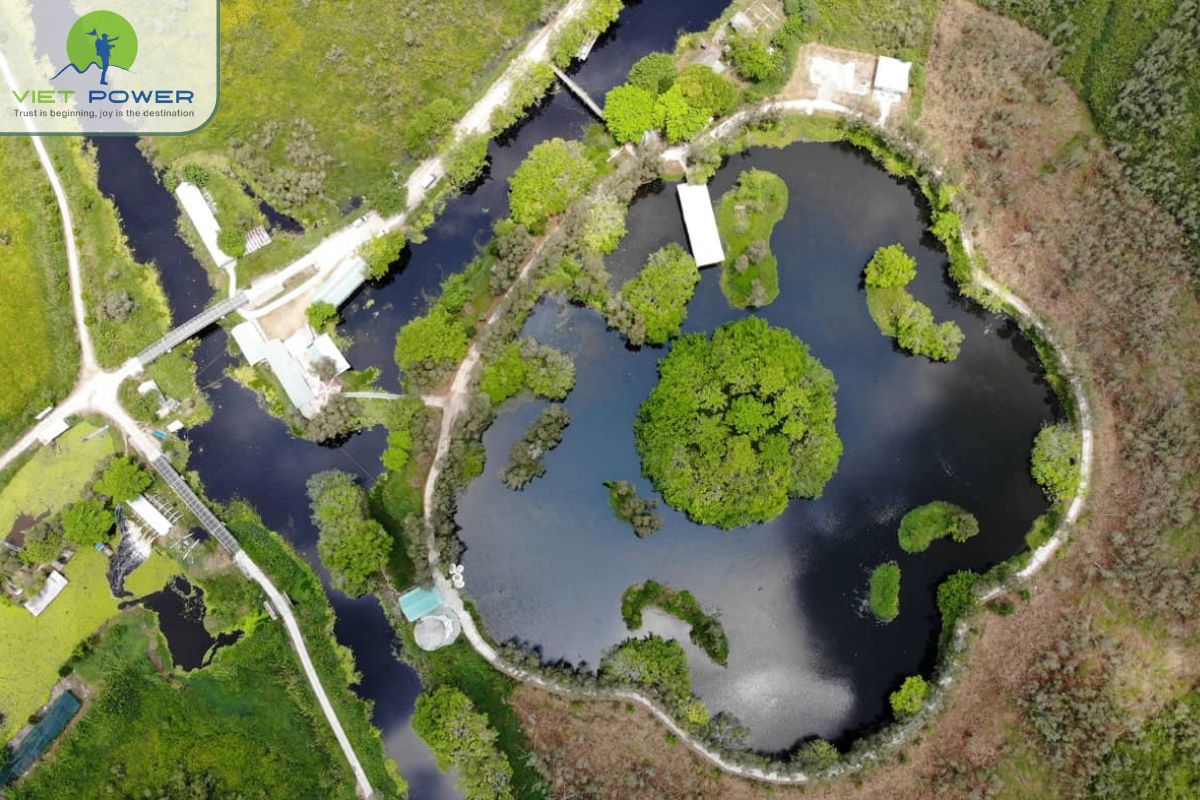
Mentioning U Minh National Park, we are talking about a very special ecosystem. It is located in the far south of the Mekong Delta, spreading across two provinces: Kien Giang and Ca Mau. This area is famous because it is one of the most important "peat swamp" forests in Vietnam and even the world.
What Is A Peat Swamp?
Imagine a forest where the ground is not made of hard dirt, but of thick, black layers of decayed plants that have piled up for thousands of years. This soil is called peat. It acts like a giant, natural sponge.
During the rainy season, it soaks up water to prevent floods. In the dry season, it releases that water to keep the forest green. This soil is also very rich in carbon, which helps the Earth stay cool.
The Two Halves of U Minh
U Minh is so large that it is divided into two main parts by the Trem River:
The Kingdom of Melaleuca Trees
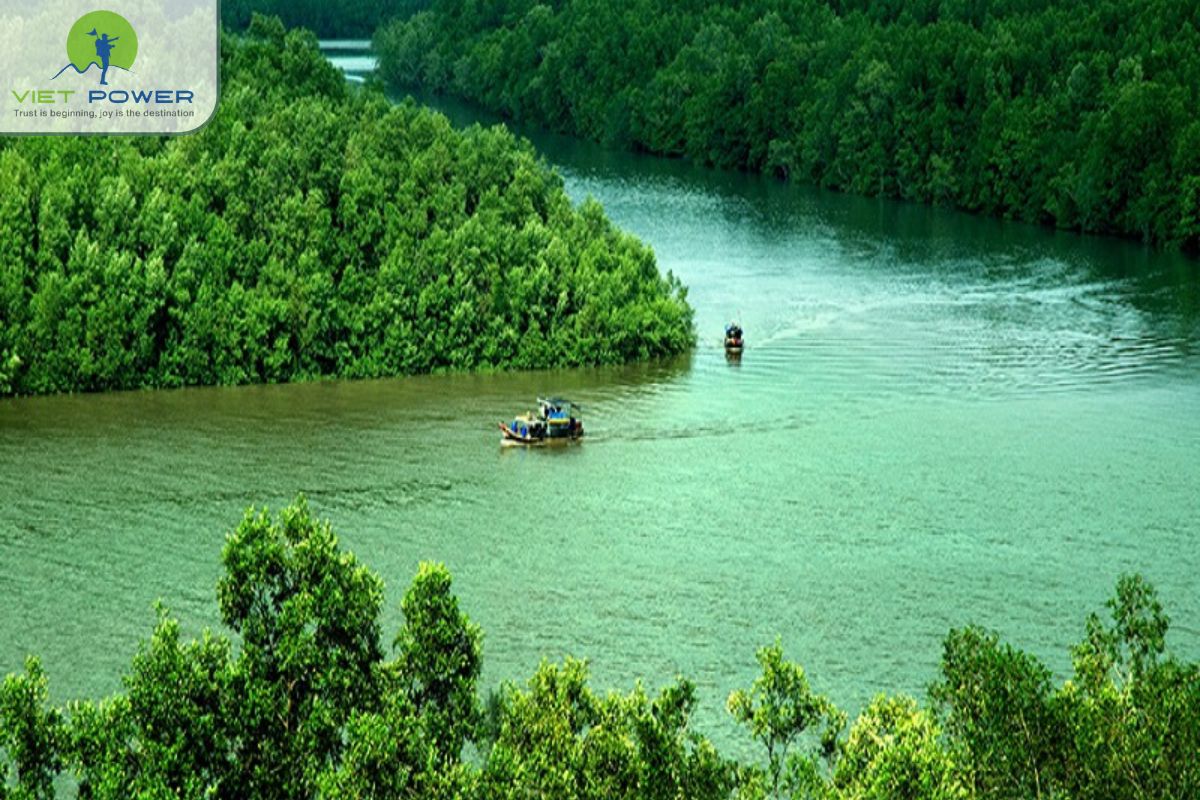
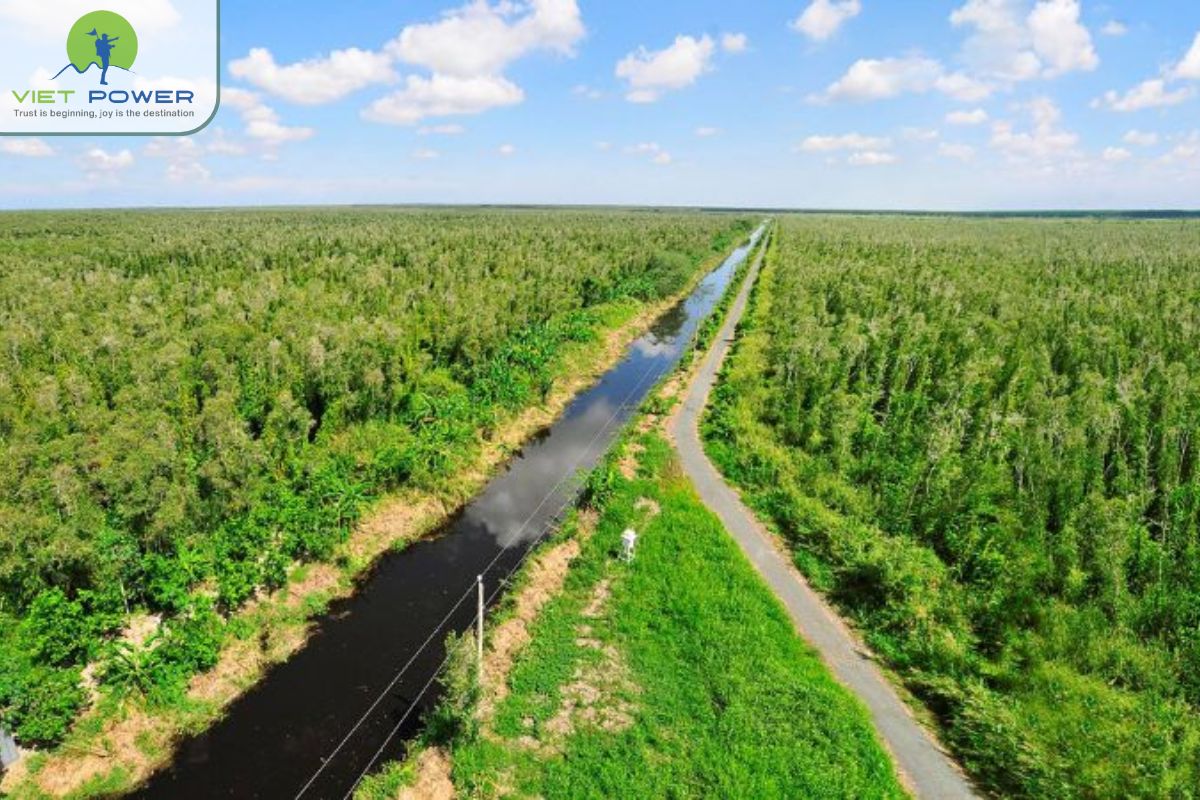
The landscape here is dominated by the Melaleuca tree (locally called tràm). These trees are amazing because they have oily, white, peeling bark that protects them from the water.
They are one of the few trees that can grow happily while standing in deep, flooded swamps. Because the forest is so thick and there are so many canals, it creates a safe "fortress" for wildlife.
A Paradise for Rare Animals
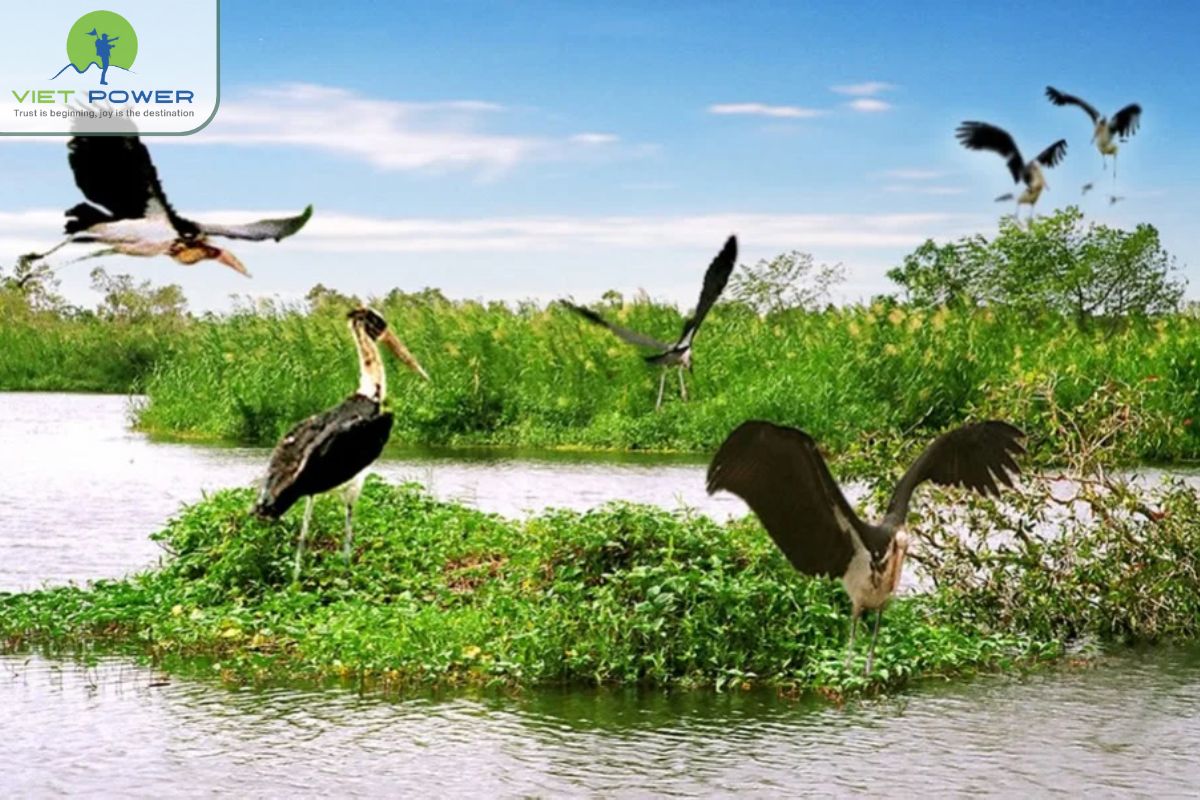
Because humans find it hard to walk through the deep mud and thick trees, animals have plenty of space to live. U Minh is a paradise for:
Interesting Fact: The U Minh forest is one of the largest remaining peat swamp areas in all of Southeast Asia. This makes it a "green lung" for Southern Vietnam.
It helps clean the air, filters the water, and provides a home for species that can't be found anywhere else on Earth. When you stand in the middle of U Minh, you are standing in a place that has looked almost exactly the same for centuries.
Continue exploring similar posts to learn more about Vietnam’s diverse attractions and unique travel experiences. Our Vietnam tourist attractions category is filled with ideas to help you plan your perfect adventure.
Many travelers consider visiting U Minh Thuong or U Minh Ha. While they are part of the same giant ecosystem, each park has its own personality. Together, they create a complete picture of the Mekong Delta’s wild heritage.
U Minh Thuong is located in Kien Giang Province, about 65 km from Rach Gia city. It is often called the "upper" forest.
This area is highly protected because it contains some of the last remaining patches of primary peat swamp forest in Vietnam.
Why go to U Minh Thuong?
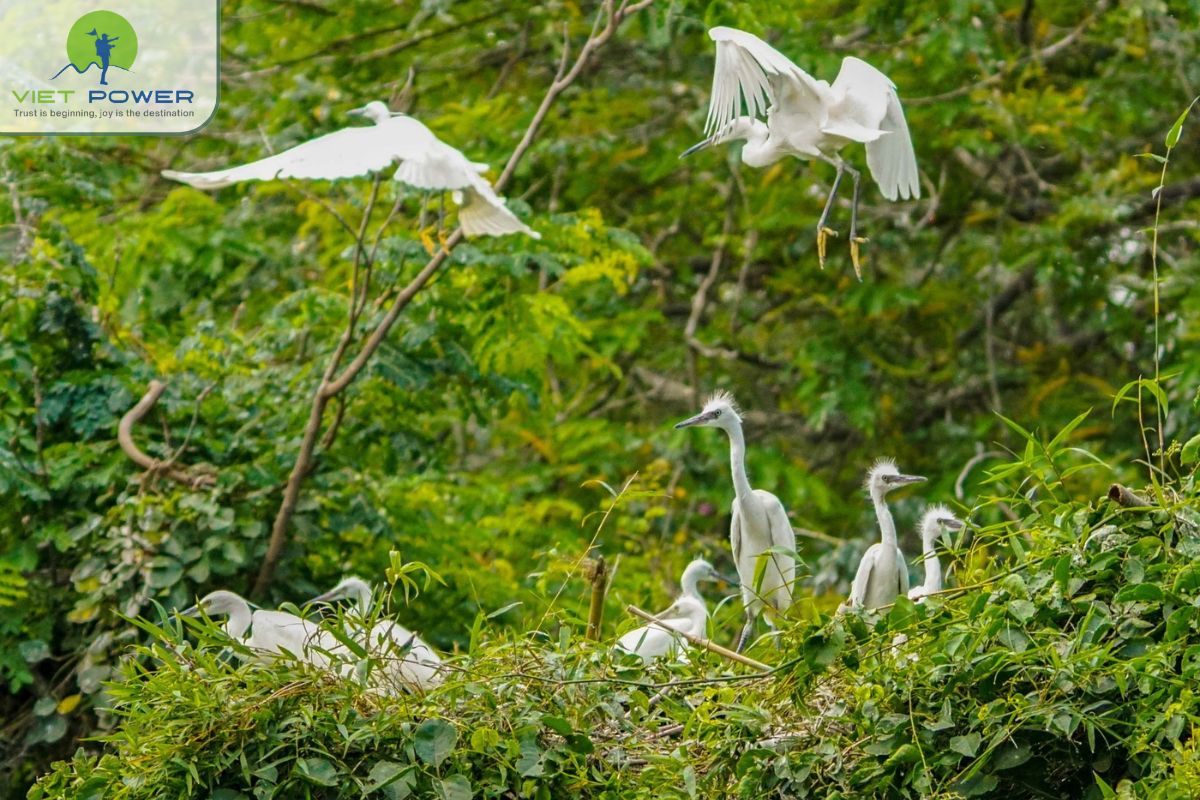
Bird Watching: This is a true paradise for bird lovers. It is home to over 180 species, including rare ones like the Painted Stork and the Spot-billed Pelican. At sunset, thousands of birds return to their nests, filling the sky with movement, a sight you will never forget.
Ancient History: Besides nature, this area holds traces of the ancient Oc Eo civilization, making it feel like a journey back in time.
The Vibe: It feels very peaceful and untouched. Because the water is high and filled with minerals from the peat, it looks like a giant, dark mirror reflecting the ancient Melaleuca trees.
U Minh Ha is the "lower" forest, located in Ca Mau Province, about 40 km from Ca Mau city. While U Minh Thuong is about quiet conservation, U Minh Ha is where nature and human life meet.
Why go to U Minh Ha?
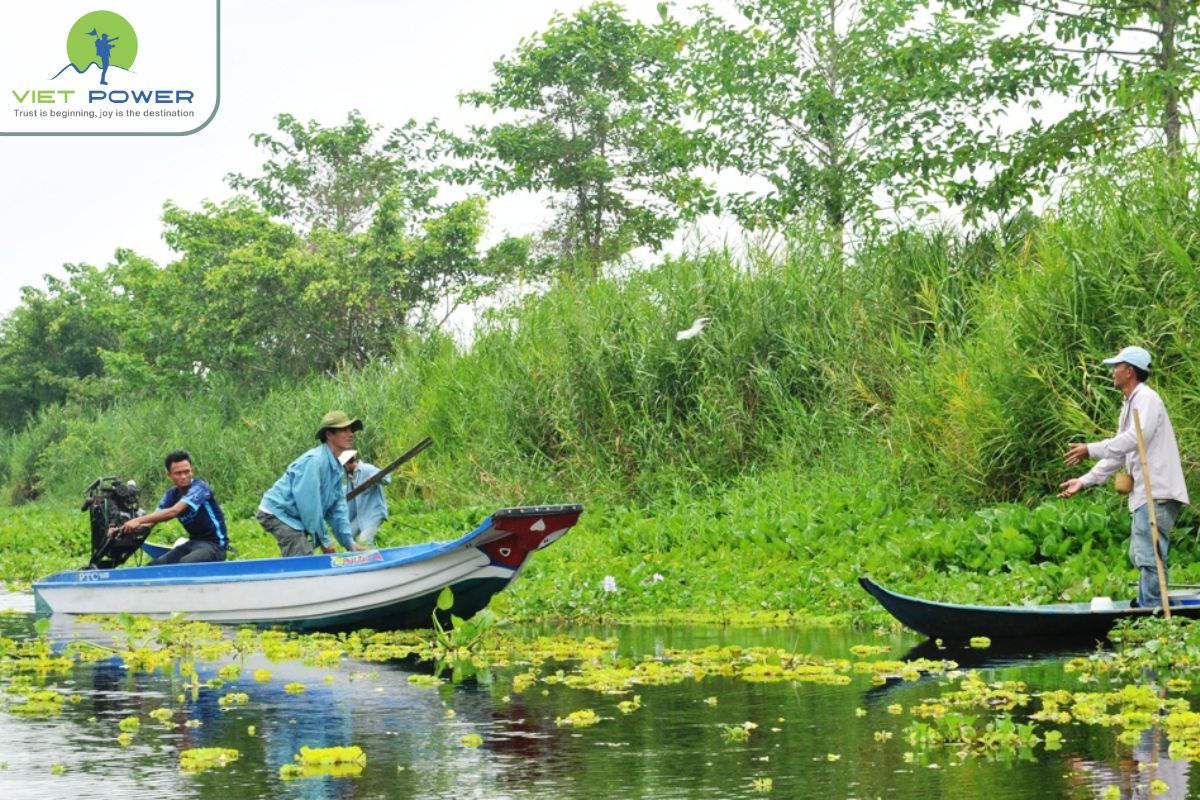
Local Livelihoods: This is the best place to see how people live with the forest. You can watch locals fishing with traditional traps or rowing their boats through the reeds.
Honey Harvesting: U Minh Ha is the heart of the honey-hunting tradition. It’s the perfect place to see beekeepers at work.
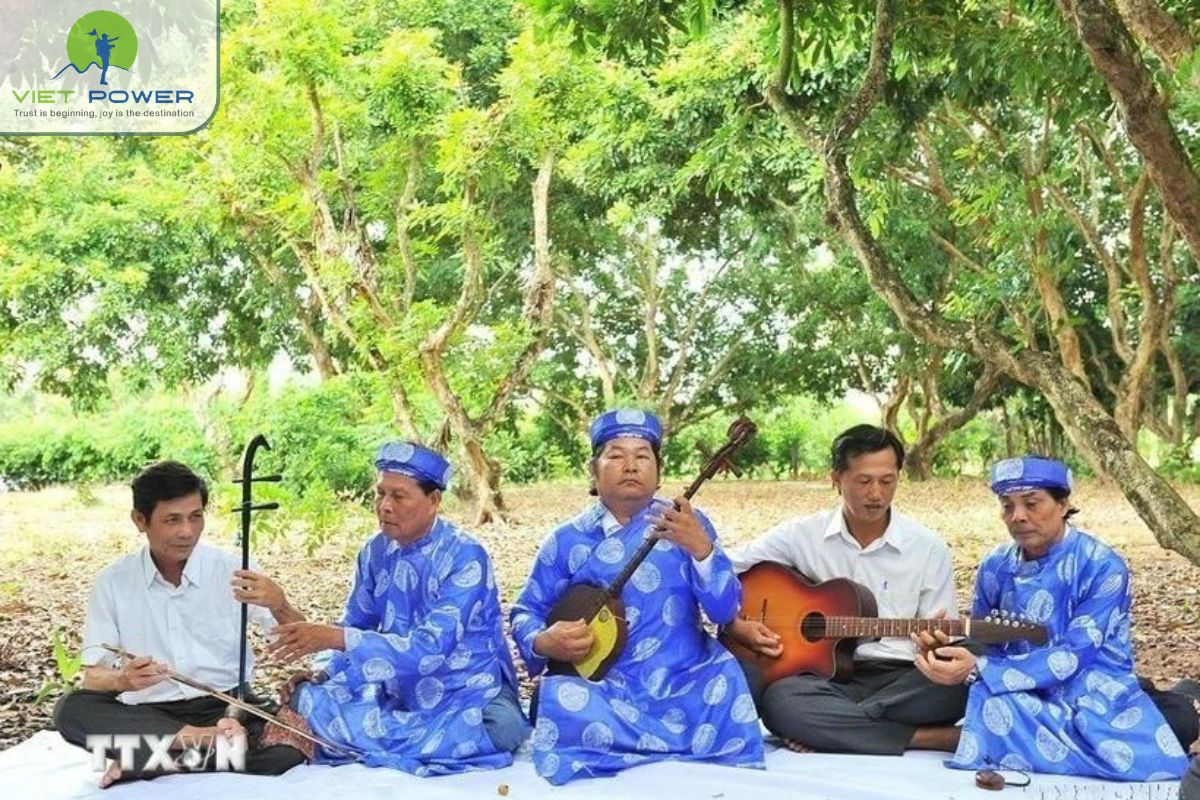
Stories and Music: This is the land of Uncle Ba Phi, a legendary storyteller. You might even hear the sweet melodies of Don Ca Tai Tu (traditional folk music) while resting in a stilt house.
The Vibe: It feels energetic and rustic. It is a mix of wild wetlands and the friendly, hardworking spirit of the southern Vietnamese people.
Comparing U Minh Thuong and U Minh Ha
|
|
|
|
|
|
|
|
|
|
|
|
|
|
|
|
|
|
|
|
Choose U Minh Thuong if you want to get lost in a quiet, prehistoric-looking world of rare animals.
Choose U Minh Ha if you want to experience the "soul" of the Mekong Delta through its people, traditions, and delicious forest food.
Let’s explore more posts on this topic to discover even more about Vietnam’s natural beauty:
U Minh is much more than just a group of trees; it is a World Biosphere Reserve recognized by UNESCO. This is like a "gold medal" for nature. It means the world has agreed that U Minh is a treasure that must be protected because the plants and animals here are very rare and important for our planet.
The wetland ecosystem here is like a living being that changes its appearance throughout the year.
Because the forest is so thick and protected, many animals call it home. If you are quiet and keep your eyes open, you can see:
Birds: There are over 100 types of birds here. You might see giant storks standing perfectly still in the water, or bright blue kingfishers diving for a snack. Some birds are so rare they are listed in the "Red Book" of endangered species.
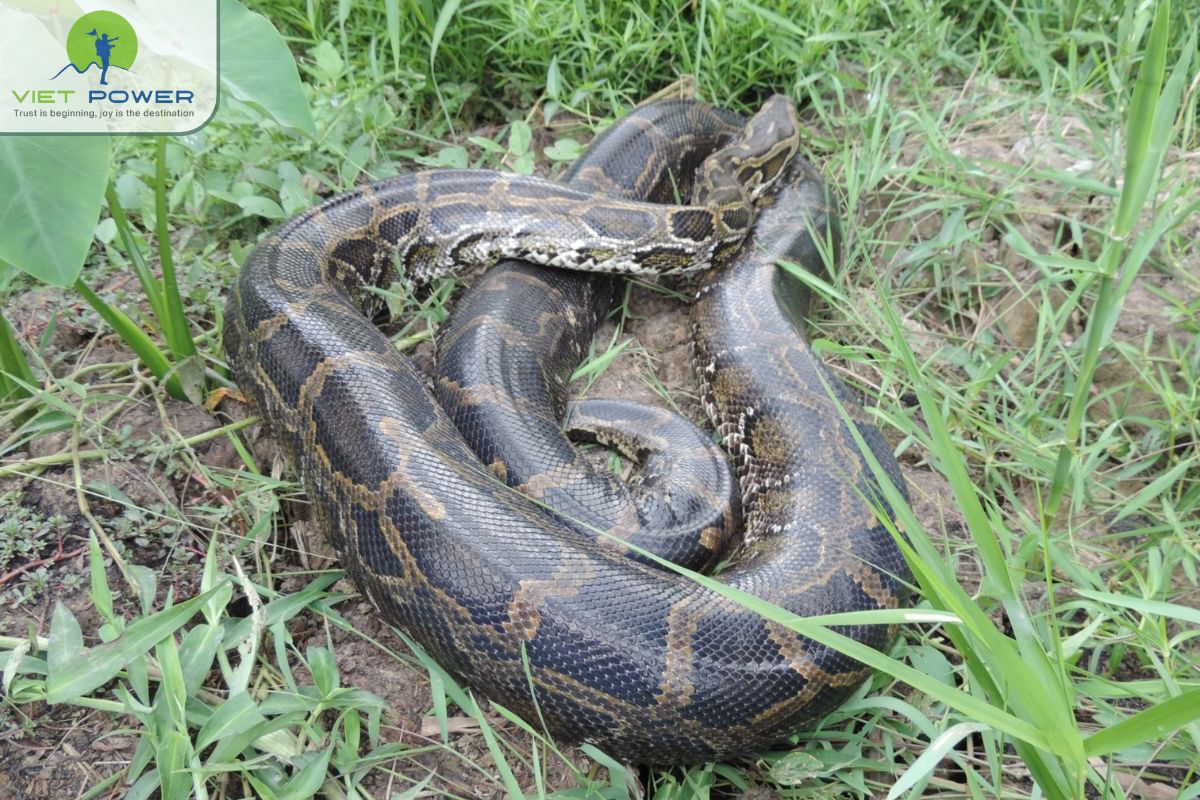
The Secretive Reptiles: It is very common to see water snakes swimming gracefully across the canals or monitor lizards sunbathing on fallen logs. Don't worry, they usually prefer to stay away from people!
The Famous Fish: The dark, tea-colored water is full of life. You will find climbing perch (fish that can breathe air!) and snakehead fish. These fish are not just important for nature; they are also the main food source for people living around the forest.
Small Mammals: If you are lucky, you might spot a long-tailed macaque (monkey) swinging through the branches or a smooth-coated otter playing in the water.
.jpg)
The Melaleuca tree (cây tràm) is the hero of U Minh. These trees are built for survival. Their roots act like natural filters, cleaning the water and keeping the ecosystem healthy. The bark of the Melaleuca is thick and soft, almost like paper, which protects the tree from the swampy environment.
When you visit, take a deep breath. You will notice a fresh, slightly medicinal, and earthy smell. That is the scent of the Melaleuca leaves and the healthy peat soil, it is the "perfume" of a wild biosphere.
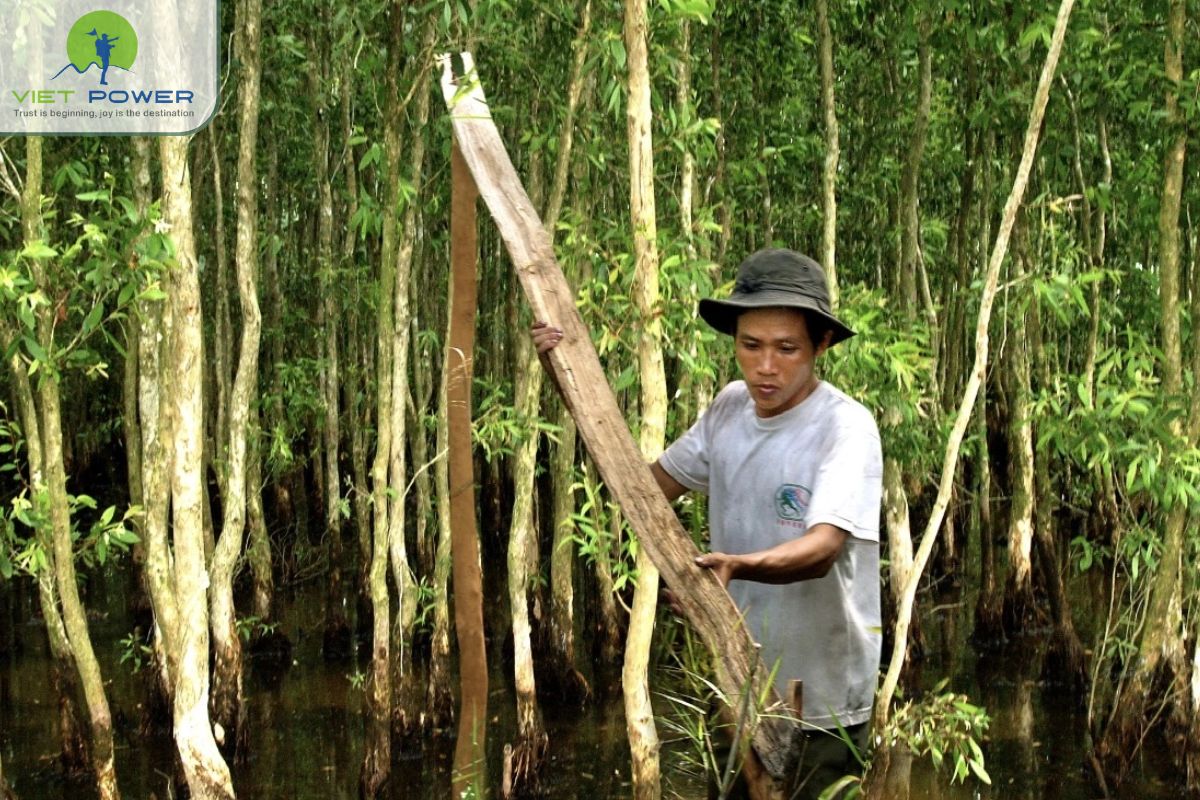
Fact: Did you know that the peat layer under the trees can be several meters thick? It stores a huge amount of water, acting like a natural "air conditioner" that keeps the whole region cool even in the hot summer months.
Experience Vietnam your way with a custom-crafted itinerary created by the experts at Vietpower Travel.
One of the most exciting things about U Minh is the honey hunting tradition. This is not something you see in a big city! For people in the south, this isn't just a job; it is an art form called nghề ăn ong (eating with the bees). In 2019, it was even recognized as a National Intangible Cultural Heritage.
For generations, local families have harvested honey from wild bees (Apis dorsata). These bees love the tiny, white blossoms of the Melaleuca trees.
Because the bees eat only natural nectar, the honey from U Minh is famous for being pure, thick, and having a beautiful amber color with a sweet, herbal scent.
When is the honey season? While bees are active all year, there are two main seasons:
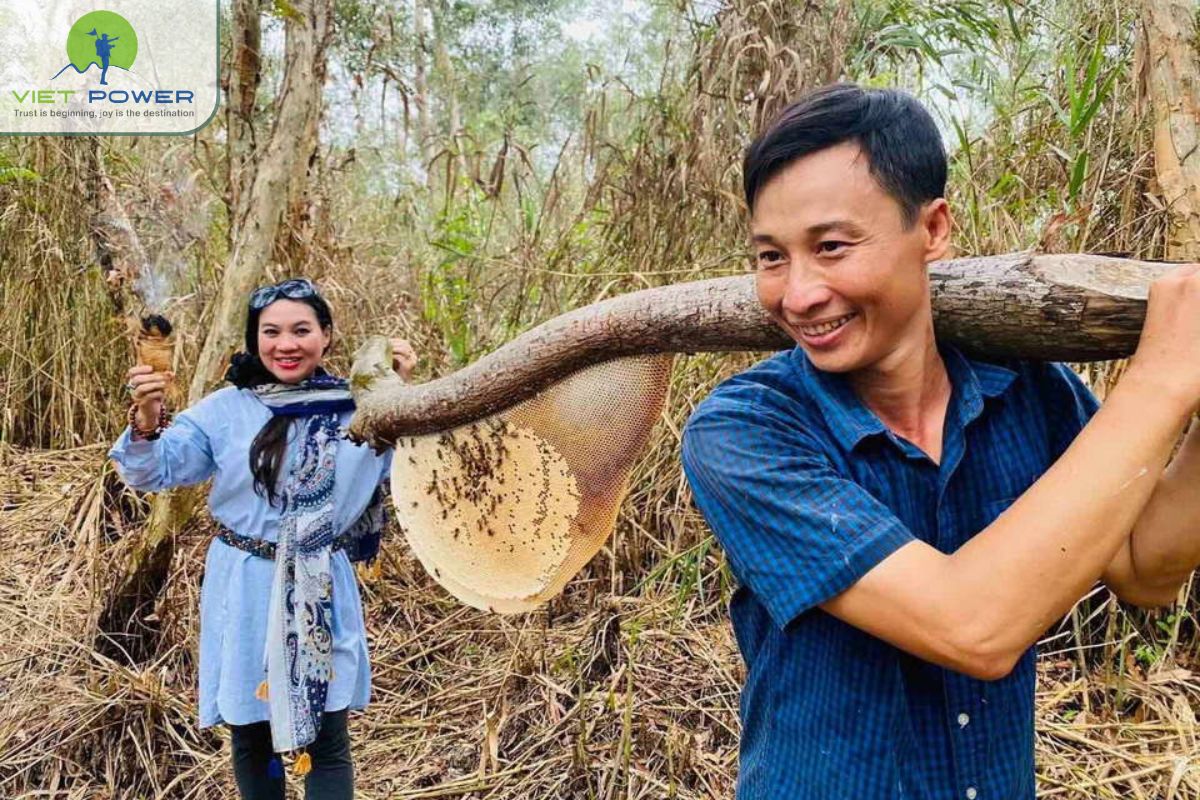
How do they hunt honey? The hunters don't just wait for bees to find a branch. They "invite" the bees to a specific spot using a clever technique called Gác kèo ong:
.jpg)
This tradition is a beautiful example of how humans can live with the forest. By protecting the bees, the people of U Minh are also protecting the trees and the entire ecosystem.
A Taste of the Forest: If you visit during harvest time, you might get to try a local favorite: fresh bee larvae (the young bees) dipped in golden honey. It is creamy, sweet, and very healthy!
Discover more posts on the same topic to deepen your appreciation of Vietnam’s nature:
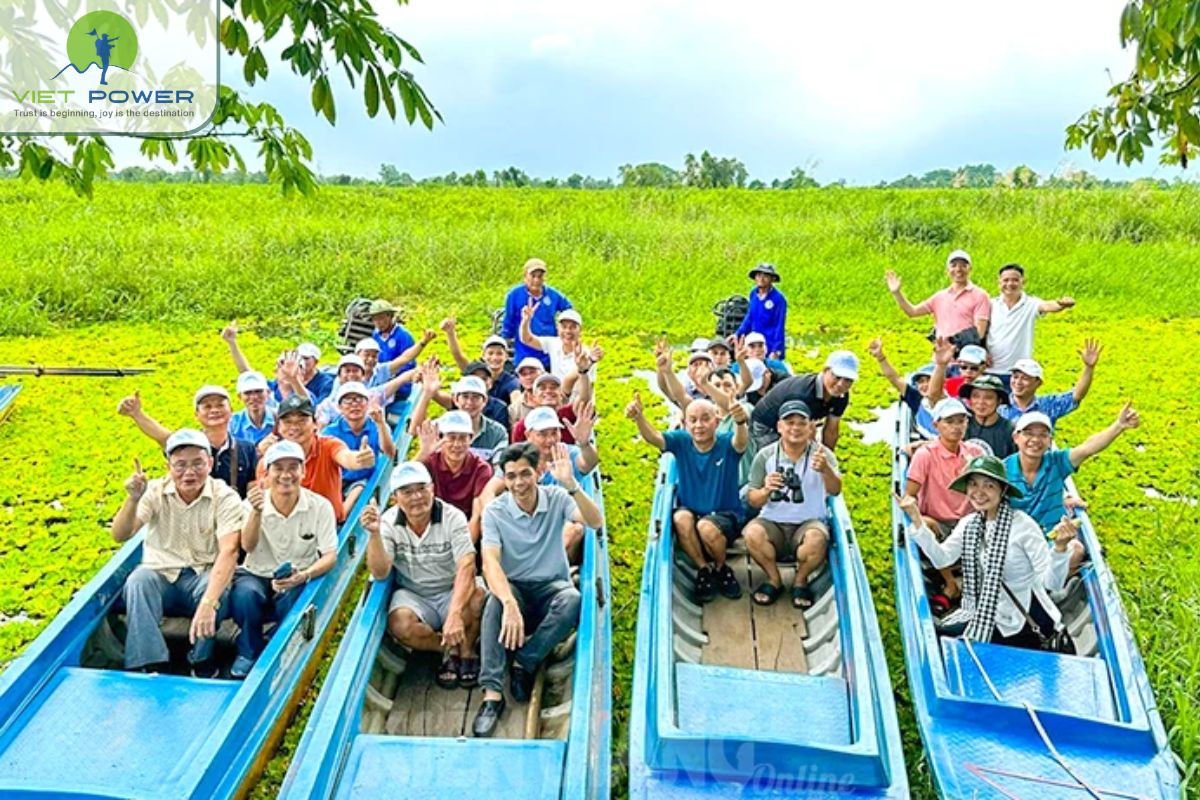
How should you see the forest? There are two main ways to explore this green wonderland. Each way gives you a different perspective, and many visitors like to try both to get the full experience!
This is the most popular way to see U Minh. Because the forest is full of canals, the boat is the best way to go deep into the center where the trees are thickest. You will sit in a long, thin wooden boat called a vỏ lãi.
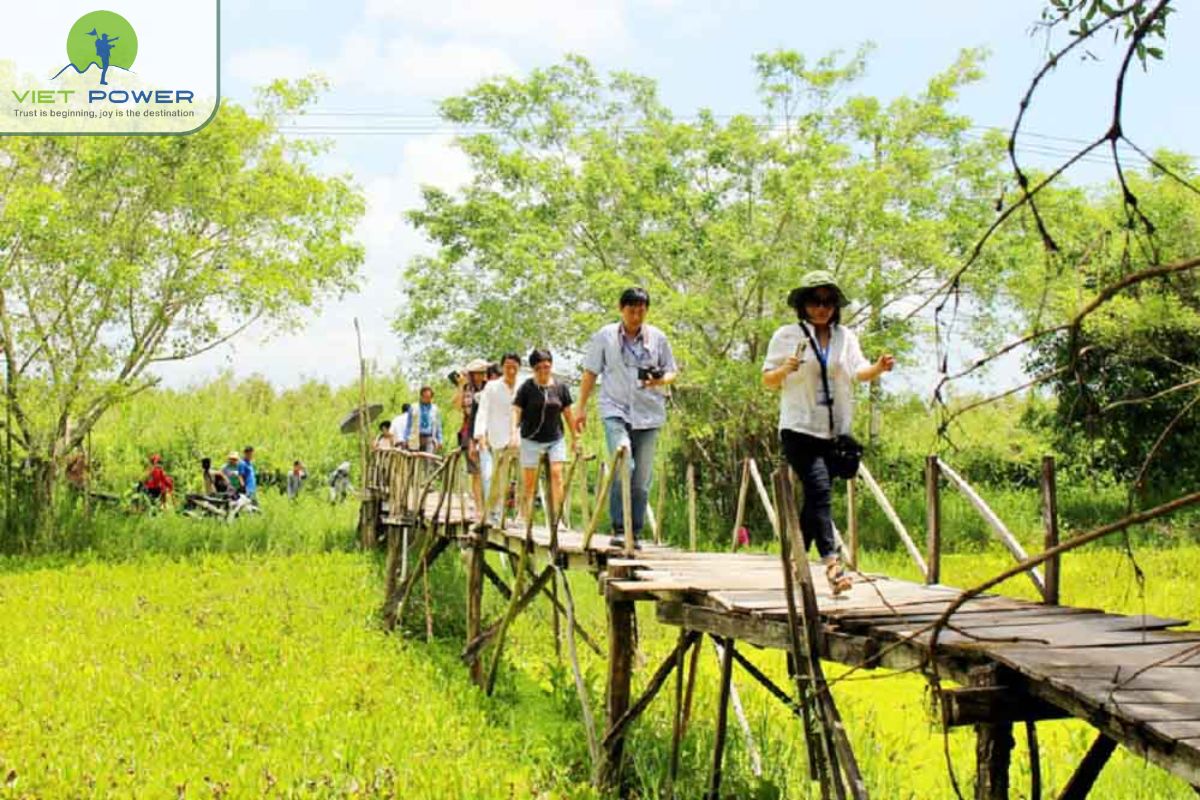
If you like to be active and move your legs, you can choose to walk on the forest paths. This is a great way to feel the "earth" of U Minh under your feet.
You cannot leave U Minh without eating! The food here is fresh, organic, and comes straight from the forest and the canals. It is the taste of the Mekong Delta in every bite.
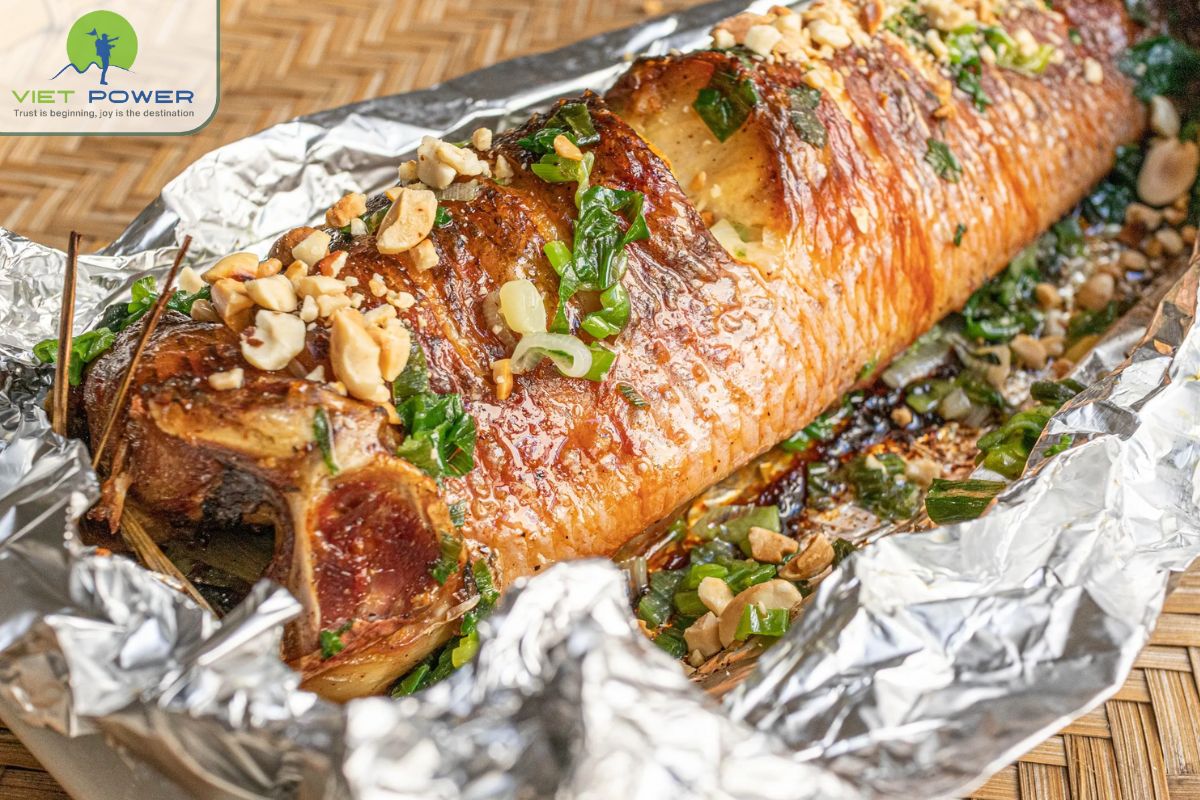
Travel Tip: After your meal, don't forget to try a cup of Melaleuca tea. It is very light and helps your stomach feel comfortable after a big forest feast!
U Minh is beautiful all year round, but it changes its "clothes" depending on the season. Because it is a wetland, the water level completely changes how the forest looks and how you can move around. Here is a quick guide to help you choose the best time for your trip:
This is when the sun shines brightly, and the water levels in the forest begin to drop.
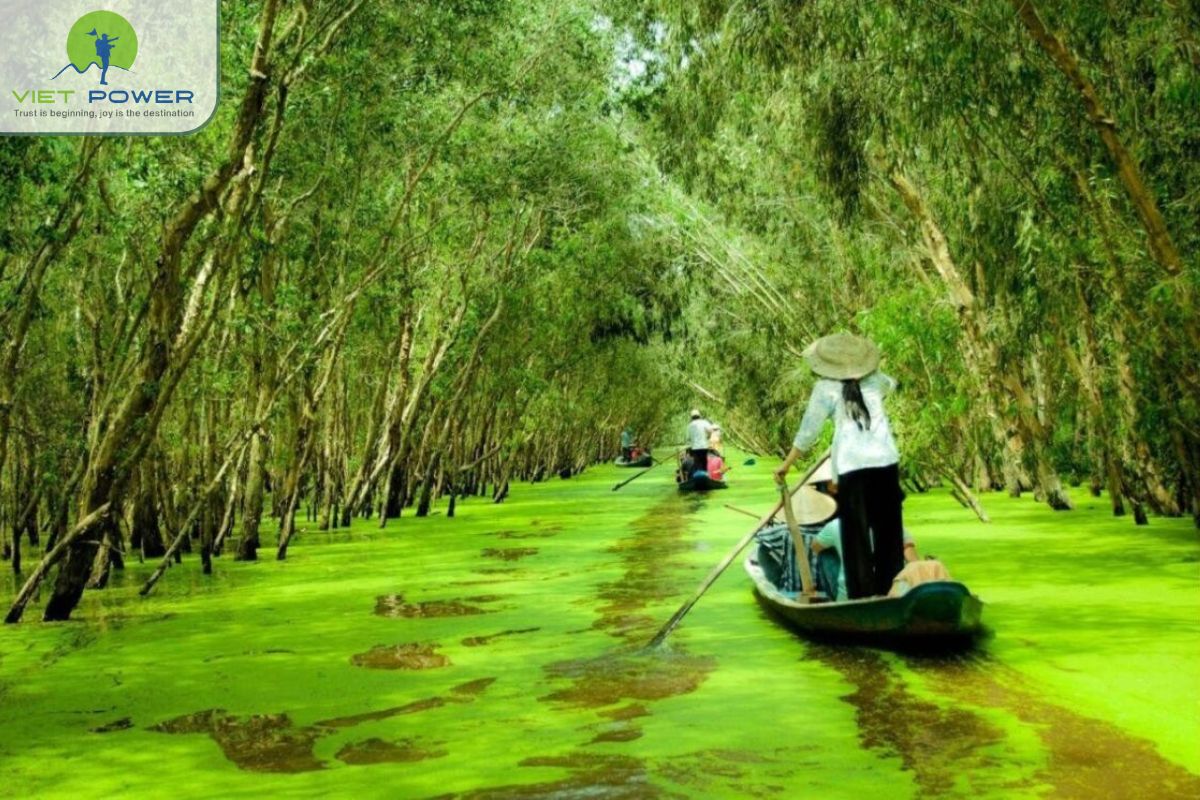
In the Mekong Delta, the rain brings the "rising water" season. This is when U Minh truly earns its name as a flooded forest.
.jpg)
Summary Table: When to Go?
|
|
|
|
|
|
|
|
|
|
|
|
|
|
|
|
|
|
|
|
U Minh National Park is a treasure of southern Vietnam. It is a place where nature still rules, and where life slows down to the pace of a floating boat.
From the unique peat swamp ecosystem to the incredible bravery of the honey hunters, U Minh offers an adventure you won't find in a guidebook. It is peaceful, authentic, and full of surprises.
Are you ready to explore the wild? With personalized tours from Vietpower Travel, you don't have to worry about the details. We provide well-planned itineraries that combine nature exploration with cultural encounters. You will get to meet local people, eat amazing forest food, and see the best of the Mekong Delta.
Contact us today to start your active journey into the green heart of U Minh!
Please kindly send us your ideas about the tours: destinations, attractions, your group, hotel class... we will get back to you with details & best offers quickly. Surely, you will feel satisfactory!
 |
 |
 |
 |
 |
 |

.jpg) Customize Your Trip
Customize Your Trip
 Vietnam
 Thailand
 Laos
Laos Indonesia
 Cambodia
 Myanmar
 Indochina Tours