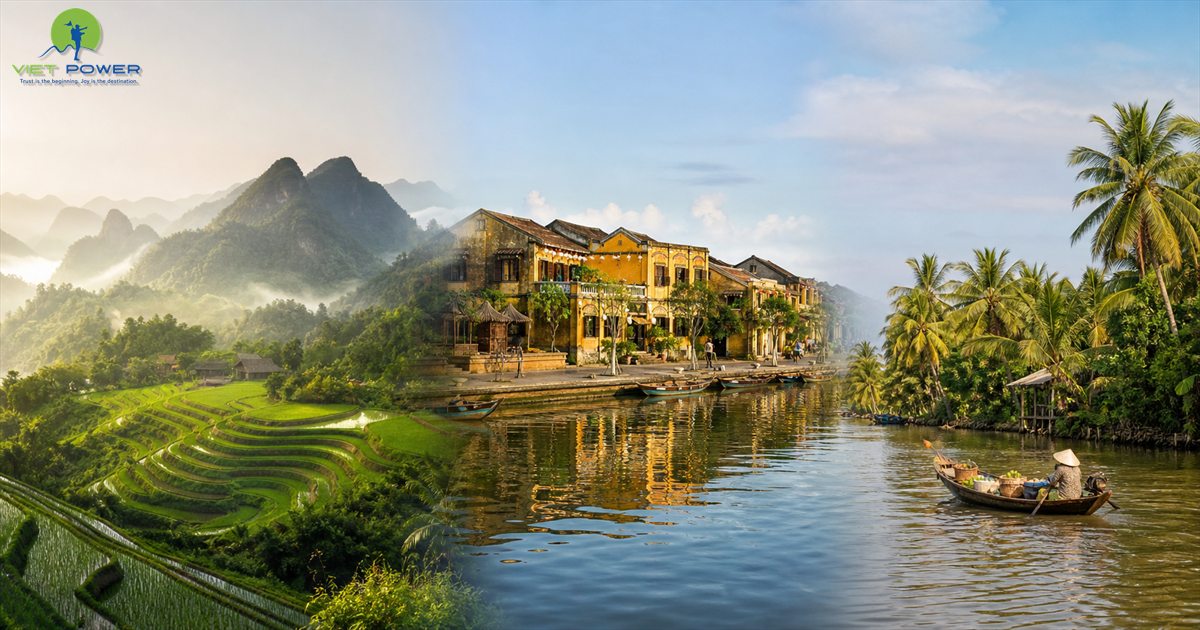
Vietnam is a year-round destination, but the weather shifts sharply from the north to the south. The best time to visit Vietnam overall is March to May, when most of the country stays warm, dry and comfortable before the summer heat and rains arrive. The one window to plan carefully around is October–November on the central coast, when the heaviest rain and storm risk hits Hue, Da Nang and Hoi An.
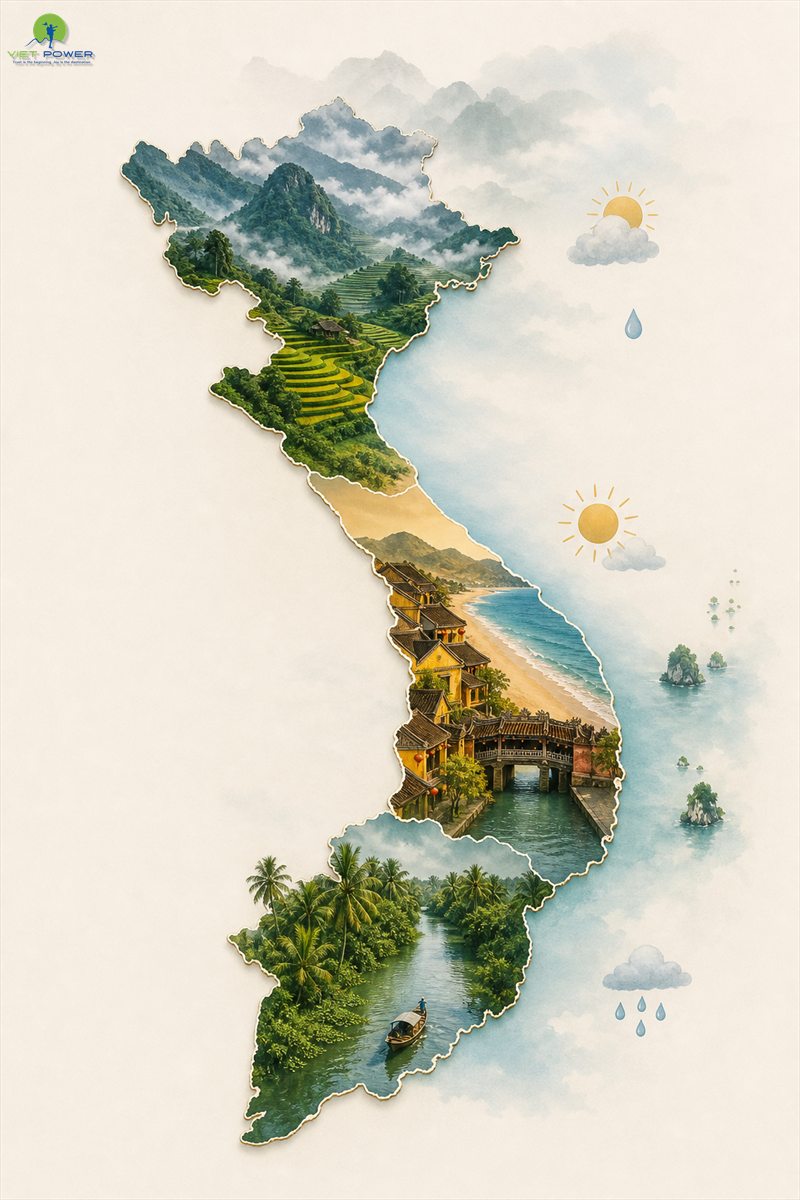
Because Vietnam stretches more than 1,600 km, the north, centre and south each run on a different weather clock. The practical rule is simple: match the month to the region, not to a single national "best month." This guide gives you a clear 3-region timing table, the best months by travel style, and how to travel well even in the rainy season.
The short answer: March to May is the best overall window, with warm, dry and stable weather across most regions. October to November is a close second for the north and south, with thinner crowds than the December–February peak — but it is the wettest, riskiest stretch on the central coast.
Vietnam has no single dry season shared by the whole country. Instead, the dry and wet seasons slide as you move along the map. For a first trip covering Hanoi, the central heritage towns and the south, aim for February to April — the closest thing to a nationwide sweet spot. For value, the low season from May to September brings lower prices and fewer visitors, with September often the best mix of shoulder pricing and the northern rice harvest just starting.
One date to watch is Tet, the Lunar New Year (late January or February), Vietnam's biggest holiday. The country feels festive and alive, but many family-run businesses close for several days and domestic transport books out fast, so plan early if your trip overlaps. The busiest international season runs December to February, when the north and south enjoy their finest weather; expect higher prices and fuller sites. The shoulder months of April and October often give the best balance of good weather, lighter crowds and better value.
To understand why the timing works this way, it helps to know Vietnam's seasons and climate region by region before locking in dates.
Each region has its own dry and wet season, so the "best time" depends entirely on where you are going. The table below is the fastest way to plan a route that stays in dry weather as much as possible. Exact dates shift year to year, so treat these as reliable seasonal trends rather than fixed calendars.
|
Region |
Dry season (best to travel) |
Rainy / storm season |
Notes
|
|---|---|---|---|
|
North (Hanoi, Sapa, Ha Long, Ninh Binh) |
October–April |
Main rain June–August |
Cool, misty winter December–February (Hanoi can drop to ~15 °C / 59 °F, highlands colder). Golden rice terraces September–October. Best all-round: spring (Mar–Apr) and autumn (Oct–Nov). |
|
Central (Hue, Da Nang, Hoi An, Nha Trang) |
February–August |
Rain / storms September–December, peak October–November |
Best beach and heritage weather February–May. Typhoon and flood risk highest in Oct–Nov; sea trips can be cancelled. Timing varies each year. |
|
South (Ho Chi Minh City, Mekong Delta, Phu Quoc) |
December–April |
Wet season May–November |
Warm all year (~25–35 °C / 77–95 °F). Rain comes as short, heavy afternoon showers, rarely all day. Peak dry-season sun December–March. |
Best time: October–April, with spring and autumn the highlights. The north is the only part of Vietnam with four distinct seasons. Spring (March–April) brings mild, fresh days; autumn (late September–November) delivers cool air and golden rice terraces loved by photographers. Winter (December–February) is dry but cold, ideal for city sightseeing and layered trekking. Plan around the region's headline experiences with our guides to the best time to visit Sapa's rice terraces and the best time to visit Ha Long Bay, or browse Northern Vietnam tours.
Best time: February–May, before the wet season sets in. These months give the central coast warm, dry, sunny weather — perfect for Hoi An's lantern-lit old town, Da Nang's beaches and Hue's imperial sites. From September the pattern flips: the region turns into Vietnam's wettest zone, with the heaviest rain and flood risk in October–November. For a month-by-month view, see the best time to visit Da Nang, Hoi An and Hue or explore Central Vietnam tours.
Best time: December–April, the dry season. The tropical south stays warm all year, so weather rarely stops a trip. The dry months bring bright sun for Ho Chi Minh City, the Mekong Delta and island beaches. In the wet season (May–November), rain usually falls as brief, heavy afternoon downpours that clear quickly — the countryside looks its greenest, and prices are lower. Time your stay with the best time to visit Ho Chi Minh City and the best time to visit Phu Quoc, or see Southern Vietnam tours. For cool mountain air in the south, the best time to visit Dalat guide is a handy companion.
Chat with us on WhatsApp: +84 936 336 389 — tell us your travel dates and we'll build a private itinerary that follows the best weather across every region.
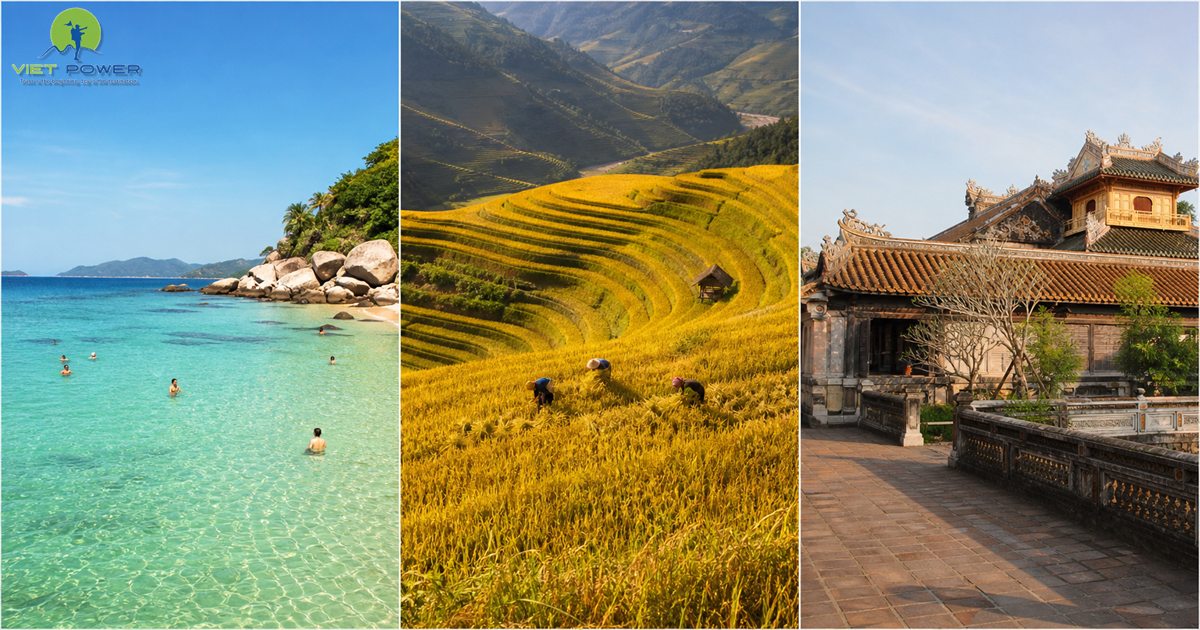
Your ideal month also depends on what you want to do. Beach lovers, trekkers, culture seekers and photographers each have a different sweet spot. Use the table below to match your trip's focus to the right window.
|
Travel style |
Best months |
Where & why
|
|---|---|---|
|
Beaches & islands |
Central: Apr–Aug · South: Dec–Apr |
Da Nang and Nha Trang shine in early summer; Phu Quoc and the southern coast peak in the dry season. |
|
Rice-terrace trekking |
Sep–Oct (harvest) · Mar–May (green) |
Sapa, Mu Cang Chai and Ha Giang glow gold in autumn; spring is lush and mild. Avoid Jun–Aug for muddy, slippery trails. |
|
Culture & heritage |
Feb–Apr |
Mild, dry weather makes walking Hue, Hoi An and Hanoi comfortable; Tet (Lunar New Year) adds festive colour. |
|
Photography |
Sep–Nov · Mar |
Golden northern terraces, clear Ha Long skies and dramatic morning light. March brings haze-free coastal views. |
Muslim-friendly and Middle Eastern travellers often combine cool-season city stays with beach time; families from Malaysia and Australia tend to favour the March–May and July–August windows around school breaks. Whatever your style, a private itinerary lets you follow the weather rather than fight it.
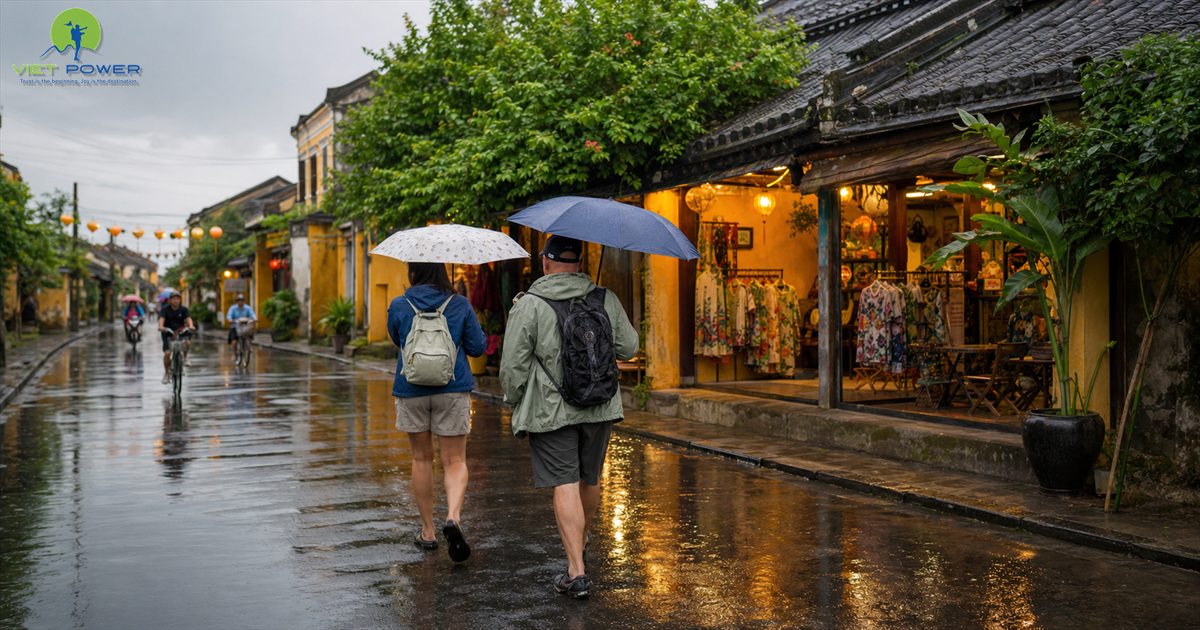
The rainy season is not a no-go — it just needs smarter routing. Vietnam's rains rarely fall as constant, all-day drizzle. In the north and south they come in short bursts, while the central coast sees the heaviest, most concentrated rain from September to December, peaking in October–November. Exact timing varies year to year.
The storm angle matters most on the central coast. Typhoons can bring flooding to Hoi An and Da Nang and lead to cancelled boat trips, so the safest move in October–November is to shift the focus of your trip. When the centre is wet, the north and south often stay pleasant — a good time for Hanoi, Ha Long, Ho Chi Minh City and the Mekong.
The wet season also has real upsides: fewer crowds, lower hotel and flight prices, and greener landscapes. With a flexible private itinerary, a local operator can reorder your days around the forecast so a wet week in one region becomes a dry week in another. That is exactly the kind of on-the-ground adjustment we handle for travellers throughout the trip.
For a single trip covering all three regions, aim for February to April — March is the safest all-round choice. In these months, Hanoi, the central heritage towns and Ho Chi Minh City can all be enjoyed in mostly dry, comfortable weather at the same time, which is rare on Vietnam's split calendar.
A classic north-to-south (or south-to-north) route runs Hanoi and Ha Long, then Hue, Da Nang and Hoi An, then Ho Chi Minh City and the Mekong Delta. February to April keeps you ahead of the central coast's wet season and the summer heat. If your dates fall in October–November, a well-planned route can still work by front-loading the north and south and keeping central-coast time short and flexible. Ready-made options are on our Vietnam tour packages page.
Each headline destination has its own ideal window, which is why this national guide links down to focused destination guides. Use these to fine-tune your dates once you know your route:
Planning a wider Southeast Asia trip? See when to pair countries in our guides to Vietnam and Cambodia in one trip and the best time to visit Thailand and Vietnam together.
March to May is the best overall window, with warm, dry and stable weather across most of the country. For a trip covering all three regions, February to April is ideal, and March is the safest single month nationwide.
It differs by region. The north sees most rain June–August, the south is wet May–November (usually brief afternoon showers), and the central coast is wettest September–December, with the heaviest rain and flood risk in October–November. Exact timing varies each year.
February to April, with March the strongest all-round choice. In these months Hanoi, the central heritage towns and Ho Chi Minh City can all be enjoyed in mostly dry weather at the same time.
Storm and flood risk is concentrated on the central coast in October–November. To reduce disruption, travel February–May for the centre, or in the wet months focus on the north and south and keep central-coast time short and flexible. A private itinerary lets you reorder days around the forecast.
No. Outside the central-coast storm peak, rain often falls in short bursts, and the wet season brings fewer crowds, lower prices and greener scenery. With flexible routing, it can be excellent value.
The low season from May to September generally has the lowest flight and hotel prices and the thinnest crowds. September is often the best value of all, with shoulder pricing and the northern rice harvest just beginning.
Ready to plan around the best weather? Chat with us on WhatsApp: +84 936 336 389 and our local team will design a private, worry-free Vietnam itinerary matched to your travel dates.
Please kindly send us your ideas about the tours: destinations, attractions, your group, hotel class... we will get back to you with details & best offers quickly. Surely, you will feel satisfactory!
 |
 |
 |
 |
 |
 |

.jpg) Customize Your Trip
Customize Your Trip
 Vietnam
 Thailand
 Laos
Laos Indonesia
 Cambodia
 Myanmar
 Indochina Tours