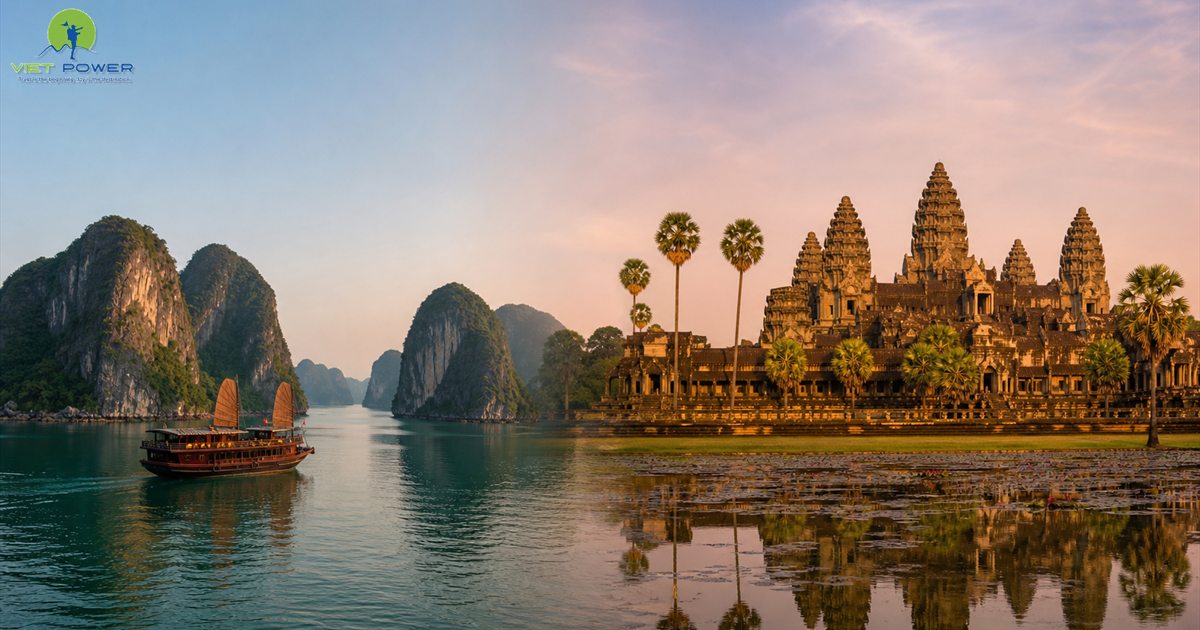
The best time to visit Vietnam and Cambodia together is November to February, when both countries sit in their cool, dry season and Angkor Wat is at its finest. This window gives you comfortable temperatures, low rainfall and the easiest cross-border travel of the year.
Both countries share a broadly similar dry season, roughly November to April, which is what makes a combined trip so workable. The main thing to plan around is Vietnam's central coast, which can still be wet in November, so a December-to-February start is the safest for a smooth two-country route. For Vietnam's full month-by-month and regional detail, see our guide to the best time to visit Vietnam.
Aim for November to February for the best overall conditions, or March for a warmer but still mostly dry alternative. The table below compares both countries' seasons at a glance, so you can pick a window that works across the whole trip. Treat these as reliable seasonal trends; exact dates shift year to year.
| Season | Vietnam (overall) | Cambodia (overall) | Best for a combined trip |
|---|---|---|---|
| Nov–Feb (cool dry) | North and south dry and cool; the central coast dries out through the period. | Cool, dry and comfortable; Angkor at its best. Peak crowds in Dec–Jan. | Best overall window. Dec–Feb is the safest for a smooth route. |
| Mar–Apr (hot dry) | Warm and mostly dry nationwide; March is excellent, April turns hot. | Hot and dry; temples are sweltering at midday. Khmer New Year mid-April. | Good in March; hot by April. Explore temples early and late in the day. |
| May–Oct (wet / green) | Short, heavy afternoon showers in most areas; landscapes turn lush. | Green season: quiet temples, lower prices, Tonlé Sap high and navigable. | Best value; fewer crowds. Pack a light rain shell and stay flexible. |
Note: Vietnam's central coast (Hue, Da Nang, Hoi An) is wettest from September to December, with storm and flood risk peaking in October–November. If your trip falls then, keep central-coast time short and lean on the north, south and Cambodia — the full regional breakdown is in the best time to visit Vietnam pillar.
The best time to visit Cambodia is November to February, the cool, dry heart of the season. Cambodia has just two seasons: a dry season from November to April and a wet, green season from May to October. November through February brings the most comfortable weather for temple touring, city walks and the southern coast, which is why it draws the biggest crowds.
March and April stay dry but grow increasingly hot, with midday temperatures often climbing into the mid-30s °C (mid-90s °F). Khmer New Year falls in mid-April, when many towns empty out as locals head home. The green season (May–October) is hot and humid with short downpours, but it rewards travellers with lush scenery, thinner crowds and better value.
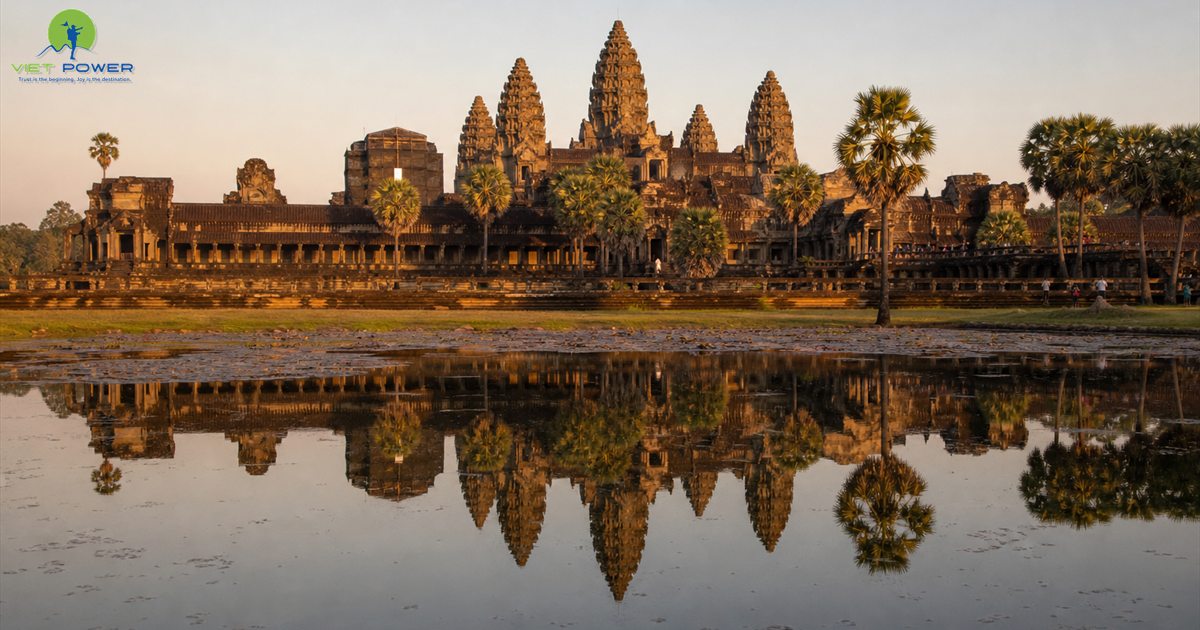
Best time: November to February for cool, clear temple days. The dry season delivers comfortable mornings and the best photography light, especially for sunrise at Angkor Wat. Crowds peak in December and January, so early November and late February are sweet spots that balance good weather with thinner lines. In the green season, temples are quiet and framed by lush growth, though paths can be slippery after rain.
Best time for boat visits: roughly August to November, when water levels are high. The Tonlé Sap swells dramatically in the wet months, so floating villages such as Kampong Phluk are fully navigable and most atmospheric late in the rainy season. In the dry months the lake shrinks and boat access is limited, though you can still see the tall stilt houses standing above the low water.
Best time: November to April, the dry season on both coasts. Cambodia's southern islands, such as Koh Rong and the beaches near Sihanoukville, are sunniest and calmest in these months — a natural match for Vietnam's dry-season beaches at Phu Quoc, Nha Trang and Da Nang. If your trip centres on sun and sea, aim for December to March, when clear skies and calm water line up across the region. During the wet months, seas can be rougher and some boat services run reduced schedules.
Chat with us on WhatsApp: +84 936 336 389 — tell us your dates and we'll match your Vietnam and Cambodia route to the best weather in both countries.
Vietnam's split calendar is the main variable to plan around, because its north, centre and south each run on a different weather clock while Cambodia stays fairly uniform. In practical terms, November to March keeps most of Vietnam dry at the same time as Cambodia's peak season, making it the natural window for a two-country trip.
The one caution is Vietnam's central coast in October–November. If those are your only possible dates, a good route front-loads the drier regions and keeps heritage-coast time flexible. For the full month-by-month picture across Vietnam's three regions, use the best time to visit Vietnam guide, and time your southern gateway with the best time to visit Ho Chi Minh City.
For a classic two-week trip, November to February is ideal, with March a strong warm-weather alternative. A typical route pairs Vietnam's headline regions with Cambodia's temples, crossing between the two by short flight or via the Mekong.
A well-loved 14-day flow runs Hanoi and Ha Long Bay, then the central heritage towns of Hue, Da Nang and Hoi An, then Ho Chi Minh City and the Mekong Delta, finishing with Siem Reap and Angkor Wat. Booked in the November–February window, this keeps you in dry, comfortable weather almost throughout. See a ready-made plan in our Vietnam and Cambodia two-week itinerary, or browse private Vietnam and Cambodia tour packages we can tailor to your dates.
The green season is not a write-off — it is the value window. From May to October, Cambodia's temples are quiet and lush and hotel prices drop, while Vietnam's rains usually fall as short afternoon showers outside the central-coast storm peak. With a flexible private itinerary, days can be reordered around the forecast so you keep sightseeing largely dry.
This season also suits travellers who want the Tonlé Sap at its fullest and Angkor with fewer crowds. The trade-off is heat, humidity and the occasional heavy downpour, so light rain gear and a relaxed pace go a long way.
November to February is the best overall window, when both countries are cool and dry and Angkor Wat is at its finest. December to February is the safest start for a smooth two-country route, and March is a good warmer alternative.
Yes, with one caveat. Cambodia and most of Vietnam are pleasant, but Vietnam's central coast can still be wet in early November. Keeping central-coast time short, or starting the trip later in the month, avoids most disruption.
November to February, the cool dry season, offers the most comfortable temple days and the best sunrise light. Early November and late February balance good weather with thinner crowds than the December–January peak.
Roughly August to November, when the lake is high and the villages are fully navigable by boat. In the dry season the water is low, so boat access is limited, though the stilt houses are still striking.
The green season from May to October generally has the lowest prices and the thinnest crowds in both countries. Expect heat, humidity and short showers, and pack a light rain shell.
Around 12 to 14 days works well for the headline sights of both countries at a comfortable pace. Shorter trips are possible by focusing on one Vietnam region plus Siem Reap.
Ready to plan a two-country trip around the best weather? Chat with us on WhatsApp: +84 936 336 389 and our local team will design a private Vietnam and Cambodia itinerary matched to your dates.
Please kindly send us your ideas about the tours: destinations, attractions, your group, hotel class... we will get back to you with details & best offers quickly. Surely, you will feel satisfactory!
 |
 |
 |
 |
 |
 |

.jpg) Customize Your Trip
Customize Your Trip
 Vietnam
 Thailand
 Laos
Laos Indonesia
 Cambodia
 Myanmar
 Indochina Tours